
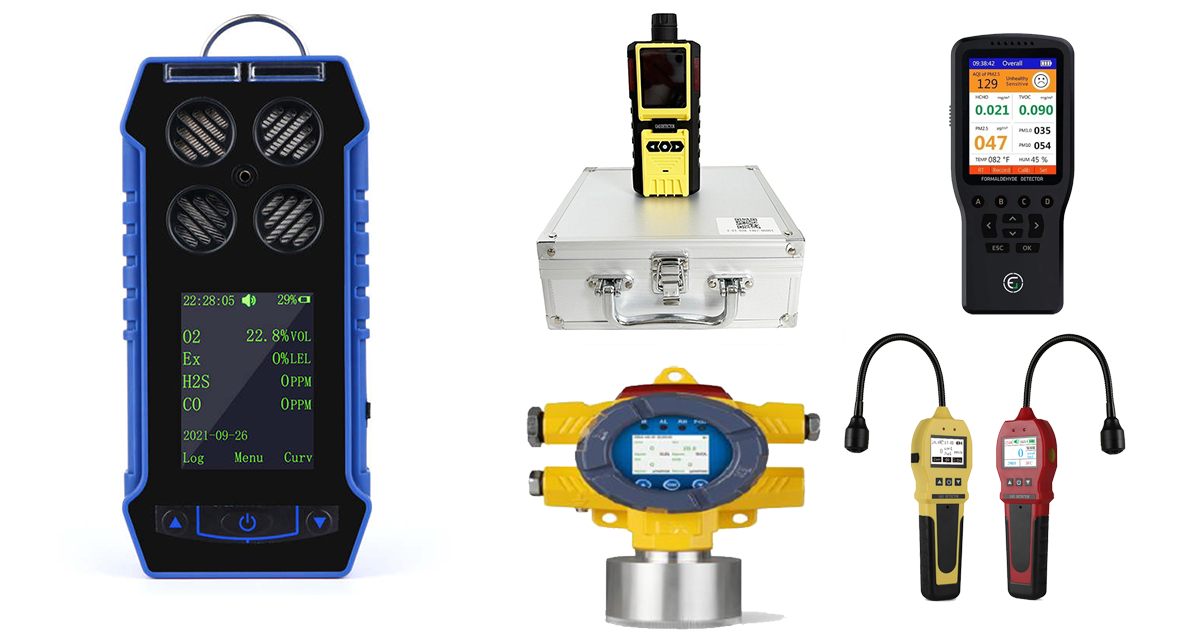
Choosing a gas detector is one of the most consequential purchases a safety officer makes. Get it right and hazardous atmospheres are caught before anyone is harmed. Get it wrong and the equipment becomes an expensive false sense of security.
This guide walks through the decisions that actually matter — written for procurement officers, HSE managers and site supervisors in Tanzania and across the wider region.
Step 1: Identify which gases you are actually facing
Before comparing brands or prices, list the hazards present at your site. Most industrial environments fall into one or more of these categories:
- Oxygen deficiency or enrichment — confined spaces, tanks, storage vessels, sewers
- Combustible gases (LEL) — methane, propane, petrol vapours, solvent fumes
- Toxic gases — carbon monoxide (CO), hydrogen sulphide (H₂S), ammonia, chlorine, sulphur dioxide
- Volatile organic compounds (VOCs) — paints, adhesives, fuels, degreasers
In mining operations, methane and CO are the usual priorities. In wastewater and sewer work, H₂S is the killer. In fuel depots and chemical stores, combustible vapours and VOCs dominate. Your hazard list determines your sensor list — not the other way round.
Step 2: Fixed or portable?
Portable detectors travel with the worker. They are essential for confined-space entry, maintenance work, inspections and any task where the worker moves between areas. A worker entering a tank needs the detector on their person, not on a wall three metres away.
Fixed detectors are permanently installed and monitor a specific zone continuously. They suit boiler rooms, compressor houses, gas storage areas, plant rooms and process lines. They can trigger alarms, ventilation systems and plant shutdowns automatically.
Most sites need both. A common and dangerous mistake is installing fixed monitors and assuming portable units are unnecessary — or vice versa.
Step 3: Single-gas or multi-gas?
A single-gas detector monitors one hazard. They are compact, affordable and ideal when the risk is well-defined and constant — a CO monitor in a generator room, for instance.
A multi-gas detector typically monitors four gases at once: oxygen, combustible gases (LEL), CO and H₂S. This four-gas configuration is the industry standard for confined-space entry, because those four hazards cover the overwhelming majority of confined-space fatalities.
If your workers enter confined spaces, a four-gas detector is not a luxury. In most jurisdictions it is a legal requirement.
Step 4: Understand sensor technology
The sensor determines accuracy, response time, lifespan and cost. The four common types:
- Electrochemical — the standard for toxic gases and oxygen. Accurate at low concentrations. Typical life: 2 to 3 years.
- Catalytic bead — the workhorse for combustible gases measured as %LEL. Requires oxygen to function and can be poisoned by silicones and sulphur compounds.
- Infrared (IR) — measures combustible gases and CO₂ without needing oxygen. Immune to poisoning, longer life, higher cost. The right choice for inert or oxygen-deficient atmospheres.
- Photoionisation detector (PID) — the only practical option for VOCs at low concentrations. Essential in paint shops, solvent handling and environmental investigation work.
Step 5: Plan for calibration before you buy
This is where many organisations fail. A gas detector is not a smoke alarm you install and forget. Sensors drift. Readings become unreliable. An uncalibrated detector will happily display a comfortable reading in a lethal atmosphere.
Two routines are non-negotiable:
- Bump test — before each use or each shift, expose the detector to a known gas concentration and confirm the alarm activates. This takes under a minute.
- Full calibration — typically every three to six months, or per manufacturer guidance, using certified calibration gas.
When budgeting, include calibration gas, regulators, a docking or calibration station, and replacement sensors. A detector purchased without a calibration plan is a detector that will eventually mislead someone.
Step 6: Check the certification
Look for equipment certified to recognised international standards, and for intrinsic safety ratings (ATEX, IECEx or equivalent) if the detector will be used in explosive atmospheres. In Tanzania, equipment should also align with guidance from OSHA and the Tanzania Bureau of Standards (TBS).
Be cautious of unbranded imports with no certification documentation, no local service support and no source of replacement sensors. The purchase price is not the cost — the cost is the price plus five years of calibration, sensors, servicing and downtime.
Common mistakes worth avoiding
- Buying on price alone. A cheap detector with no available replacement sensors becomes electronic waste in eighteen months.
- Skipping bump tests. The single most common cause of a detector failing when it matters.
- Ignoring sensor cross-sensitivity. Some sensors respond to gases other than the target gas, producing false readings.
- No training. A detector that alarms means nothing if the worker does not know what the alarm signifies or what to do next.
- Storing detectors in vehicles. Heat degrades sensors rapidly.
A short buying checklist
- Which specific gases must be detected?
- Fixed, portable, or both?
- Is the atmosphere potentially explosive? (Intrinsic safety rating required)
- Which sensor technology fits the gas and the environment?
- What is the sensor replacement cost and availability locally?
- Is a calibration station and calibration gas included in the budget?
- Is data logging required for compliance records?
- Who will train the workers, and how often?
Getting it right
Gas detection is one of the few areas of workplace safety where the equipment provides no visible benefit until the day it saves someone. That makes it easy to under-invest — and impossible to justify afterwards.
Specify against your actual hazards, budget for the full lifecycle rather than the purchase price, and build calibration into your routine from day one.
GO SAFE Enterprises supplies and hires certified gas detection and environmental monitoring equipment across Tanzania, with support from our offices in Morogoro and Dar es Salaam. If you are unsure which configuration suits your site, our team can advise based on your hazard profile.